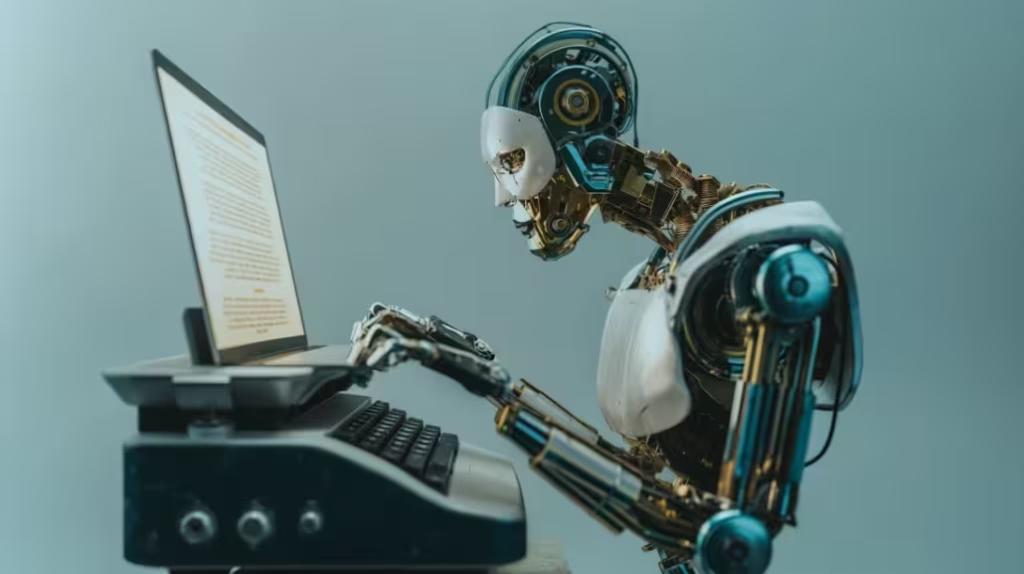

AI for Video Editing: How It’s Transforming Content Creation
AI for video editing is changing how creators, marketers, and businesses produce video content. What once required hours of manual cutting, trimming, color grading, and effects can now be done in minutes using AI-powered tools.
In 2026, AI is not just an optional feature—it is becoming a core part of modern video production workflows. From automatic editing to smart scene detection and text-to-video generation, AI is reshaping how videos are created and delivered across platforms like YouTube, TikTok, and Instagram.
What is AI for Video Editing?
AI for video editing refers to the use of artificial intelligence technologies to automate or assist in video production tasks. These tools analyze video content and help editors make faster, smarter decisions.
Common AI video editing features include:
- Auto-cutting and scene detection
- Automatic subtitles and captions
- Background removal without green screen
- Audio enhancement and noise removal
- Smart cropping and auto-reframing
- Script-to-video generation
According to industry research, AI video editing tools now combine traditional timelines with automation to speed up production while maintaining quality.
How AI Improves Video Editing Workflow
AI is designed to reduce manual effort and speed up repetitive editing tasks.
1. Faster Editing Process
AI can automatically cut raw footage into rough drafts, saving hours of manual work.
2. Smart Content Detection
AI identifies important moments, faces, objects, and dialogue to create better highlights and clips.
3. Automated Captions and Subtitles
Most AI tools now generate accurate subtitles instantly, improving accessibility and engagement.
4. Easy Repurposing of Content
Long videos can be automatically converted into short-form clips for social media.
Popular AI Video Editing Tools
AI video editing tools in 2026 are widely used by creators and businesses. Some of the most common platforms include:
- Runway (AI video generation and editing)
- Descript (text-based video editing)
- CapCut AI (short-form content editing)
- Synthesia (AI avatar videos)
These tools are designed to simplify editing for both beginners and professionals, making video production more accessible than ever.
Benefits of AI for Video Editing
AI brings several advantages to modern video creators:
1. Saves Time and Effort
Tasks that once took hours—like trimming clips or adding captions—can now be done automatically.
2. Improves Content Quality
AI enhances audio, stabilizes footage, and improves overall video clarity.
3. Boosts Productivity
Creators can produce more videos in less time, increasing content output for platforms and clients.
4. Makes Editing Beginner-Friendly
Even users with no technical editing skills can now create professional-looking videos.
AI in Content Creation Ecosystem
AI video editing works closely with other creative tools. For example, AI writing tools help generate scripts, while AI design tools help create thumbnails and graphics.
You can explore more related tools here:
👉 https://smartappsguide.com/free-ai-tools-2026/
This guide covers free AI tools that support video creation, writing, and automation workflows.
For design and visual assets used in video production, check:
👉 https://smartappsguide.com/ai-graphic-design-tools-2026/
These tools help creators build thumbnails, intros, and branding elements for videos.
Limitations of AI Video Editing
While AI is powerful, it still has limitations:
- It may misinterpret creative intent
- Advanced storytelling still needs human input
- Some tools produce generic-looking results
- Complex edits still require manual refinement
Many creators still use AI as a starting point, then refine outputs manually for better storytelling and quality control.
Best Practices for Using AI in Video Editing
To get the best results from AI video editing tools:
- Use AI for rough cuts and automation
- Add human creativity for storytelling
- Review and refine all AI-generated edits
- Combine multiple tools for better workflow efficiency
- Focus on content quality, not just speed
The Future of AI Video Editing
AI video editing is moving toward fully automated workflows where tools can:
- Create rough cuts from raw footage instantly
- Suggest edits based on content goals
- Generate multiple variations of a single video
- Help creators test different formats quickly
Industry trends show that AI will continue to reduce production time while increasing content output demands across all platforms.
However, human creativity will remain essential for storytelling, branding, and emotional impact.
Final Thoughts
AI for video editing is revolutionizing how videos are created, edited, and published. It helps creators save time, improve quality, and scale content production like never before.
But the best results come from combining AI automation with human creativity. AI handles the speed, while humans handle the story.
In 2026 and beyond, creators who learn to use AI video editing tools effectively will have a major advantage in the digital content space.