AI Is Now Generating 90% of Tinder Code
Tinder’s CTO reveals how artificial intelligence is transforming dating app development, from matching algorithms to profile photo selection features rolling out globally.
AI dating algorithms
How AI Is Reshaping Tinder’s Development Pipeline
Nearly 90 percent of new code at Tinder is now generated by artificial intelligence tools, with engineers reviewing the output before deployment. This shift has fundamentally changed how the platform’s engineering team operates, accelerating development cycles and pushing the company toward what executives call an “AI-pilled” approach to product building.
When Vinay Kuruvila joined Tinder as CTO in August 2025, adoption of AI coding tools among engineers sat at around 10 percent. Within months, that figure climbed to nearly 100 percent across the engineering team. The results have been measurable: Tinder now ships features twice as fast as it did a year ago, according to the company’s internal metrics.
At parent company Match Group, average token spending per engineer has reached approximately $600 monthly, with the top 1 percent of engineers consuming around $3,000 monthly. The company budgeted roughly $5 million for internal AI spending at the start of 2026 and now expects to reach approximately $10 million by year’s end.
Budget Controls and Engineering Productivity
While the token spending surge has been dramatic, Match Group has implemented guardrails to prevent waste. Once engineers hit a spending cap set around the 80th percentile, they require manager approval to continue using AI coding tools. This threshold system aims to ensure tokens are deployed strategically rather than reflexively.
Interestingly, the team generating the most tokens isn’t necessarily the one shipping the most features. Recommendations operates as one of Tinder’s most AI-intensive teams, yet the company’s number one token-consuming user sits on the profile team. Kuruvila noted that Tinder’s most productive engineers are using autonomous agents that operate continuously, running 24/7 without direct human oversight.
This decoupling between token consumption and output suggests that raw AI usage doesn’t automatically equal better products—the quality of how engineers prompt and direct AI tools matters considerably.
AI-Powered Matching and the “Sparks” Metric
The recommendation algorithm represents Tinder’s biggest AI success story. The core goal is straightforward: show users people they’re likely to genuinely connect with, based on shared interests and conversation potential that leads to real-world dates.
Tinder tracks connection quality through a metric called Sparks, defined as a six-way conversation occurring within a given week. The company reports that Sparks correlate strongly with conversation quality and users moving conversations off the app entirely. Users who experience Sparks return more frequently the following month. A companion metric, Sparks Coverage, measures what percentage of active users achieve these meaningful outcomes.
Since Kuruvila took over as CTO, the recommendation engine has been substantially rebuilt. The algorithm now powers one of the platform’s most anticipated upcoming features: “real-time recommendations” launching later in 2026. Currently, Tinder requires up to four hours to detect shifts in a user’s swiping behavior. The new system will process behavioral changes in seconds, similar to how TikTok’s algorithm rapidly adjusts video recommendations based on engagement patterns.
Photo Insights and Authentic Self-Representation
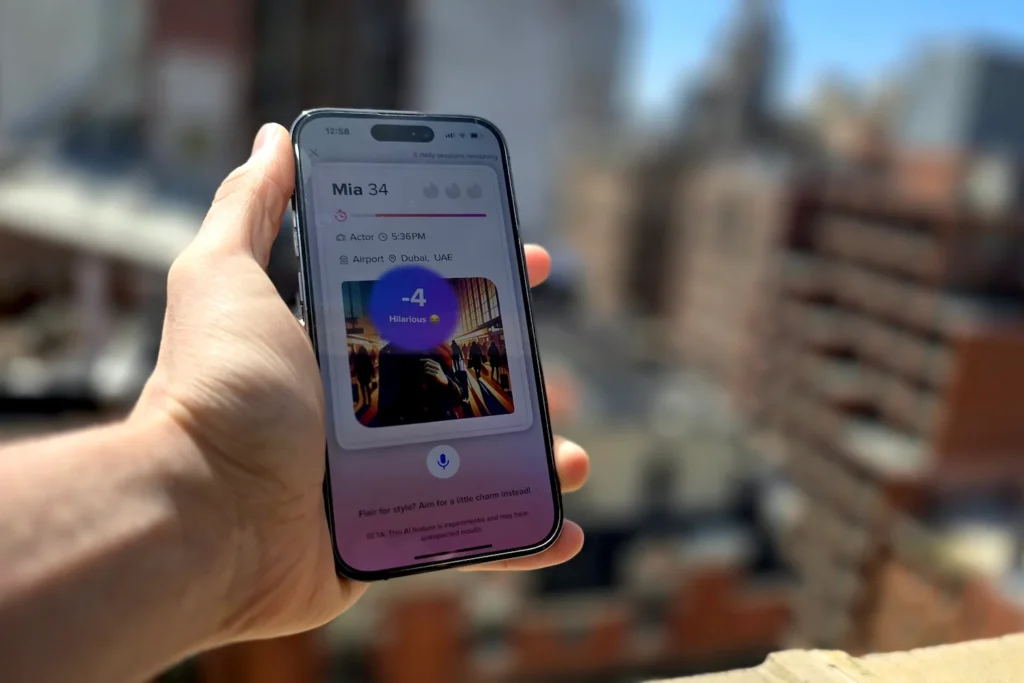
One of the most tangible AI features arriving soon is Photo Insights, an optional camera roll scanner that analyzes a user’s photos and highlights which ones strongest strengthen their dating profile. Tinder has been testing this feature across several markets and plans global rollout “soon.”
The feature addresses a real usability problem. Many users, particularly men, struggle to identify which photos actually attract matches. A shirtless gym photo might feel like your best work, but if it consistently generates fewer matches, it’s working against you. Photo Insights uses computer vision to help users represent themselves authentically while maximizing their appeal to potential matches.
Kuruvila explained the philosophy behind the tool: users often don’t know how to best represent themselves on dating apps, and AI has significant potential to help them present authentically in ways that serve their dating goals.
The Broader AI Rollout Across Match Group
Tinder isn’t alone in this AI transformation. Match Group, which operates multiple dating platforms including Hinge and Bumble, has been distributing AI tools across its entire 2,300-person workforce. All employees now have access to Claude and similar tools for day-to-day work.
Hinge’s AI-driven matching system increased matches by 15 percent after rolling out several quarters ago, demonstrating that algorithmic improvements can produce real engagement gains. However, skepticism persists among users themselves. A Match Group-commissioned study surveying 1,000 people aged 18 to 39 found that 47 percent of singles held negative views about AI in romantic contexts.
The core tension remains unresolved: will better algorithms actually help people find meaningful connections, or will they simply keep users swiping longer without delivering genuine outcomes?
What to Expect From Tinder’s AI Future
The platform’s success will ultimately depend on whether its AI investments translate to more real-world dates rather than just more time spent in-app. Features like Photo Insights and real-time recommendations are designed to reduce friction and improve match quality, but they only succeed if they drive users off the platform and into actual relationships.
If you use Tinder, watch for Photo Insights to launch globally in the coming months. The feature will be opt-in, so you’ll need to manually enable camera roll scanning if you want recommendations on which photos to use. Real-time recommendations will arrive by year’s end, bringing matching behavior closer to social media’s instantaneous response model.
Common Questions About Tinder’s AI Features
Is Photo Insights available now? Photo Insights is currently in testing across select markets and will roll out globally “soon.” You can check your Tinder app settings to see if the feature appears in your region.
Do I have to use these AI features? Photo Insights is completely opt-in—you control whether Tinder analyzes your camera roll. The recommendation algorithm runs in the background and cannot be disabled, though all matching happens with your consent.
How does Tinder protect my photos with Photo Insights? The source doesn’t specify Tinder’s data handling practices for this feature. Check Tinder’s privacy policy and the feature’s help documentation before enabling camera roll access.
The broader picture: Tinder’s bet on AI is substantial and accelerating. By the end of 2026, the platform’s matching behavior and feature set will look noticeably different. Whether that difference translates to better human connection or just more sophisticated engagement optimization remains the unanswered question that will define the next phase of the app’s evolution.